
Read Morgan County's Owner-of-Record Card
Morgan County's official Parcel Info page routes visitors to the qPublic portal. The parcel card there is the working snapshot for tax administration. Field labels can vary, so read the ones the portal actually displays during your search. Treat the owner field, mailing address, situs, and parcel number as the core facts. Skip any field the card does not clearly define.
| Owner name | The party the assessment roll associates with the parcel |
|---|---|
| Mailing address | Where tax notices or owner correspondence are sent |
| Situs address | The location being assessed |
| Parcel number | The bridge to map, tax, permit, and legal-description research |
| Sale or deed clue | A date or book/page lead that must be checked in recording records |
| Assessment notice | Current-year value and appeal evidence, not title evidence |
An owner of record is not always an occupant. Keep the mailing address and the situs address separate on every Morgan County parcel card. A tax-mail destination tells you where the tax bill goes, not where a person lives.
Measure Morgan County Currentness by Source Date
Morgan County publishes no fixed qPublic refresh interval and no typical closing-to-roll lag. Say that plainly. A sale can be recorded before the assessor's owner field changes. So "current owner" only means current as of a named source and date. Never treat it as current by assumption.
Save the qPublic search date plus any sale or assessment date the card shows. Then compare the recording date on the newest deed. If the names differ, report both. Explain that timing may be the cause until the Assessor or the Clerk confirms otherwise. That framing keeps the property records honest.
Note: Never assign a standard update delay to Morgan County, because official sources publish none.
Start at Morgan's Current-Owner Gateway
The official Morgan County Parcel Info page leads to the free countywide assessor database, the starting point for any current-owner search.
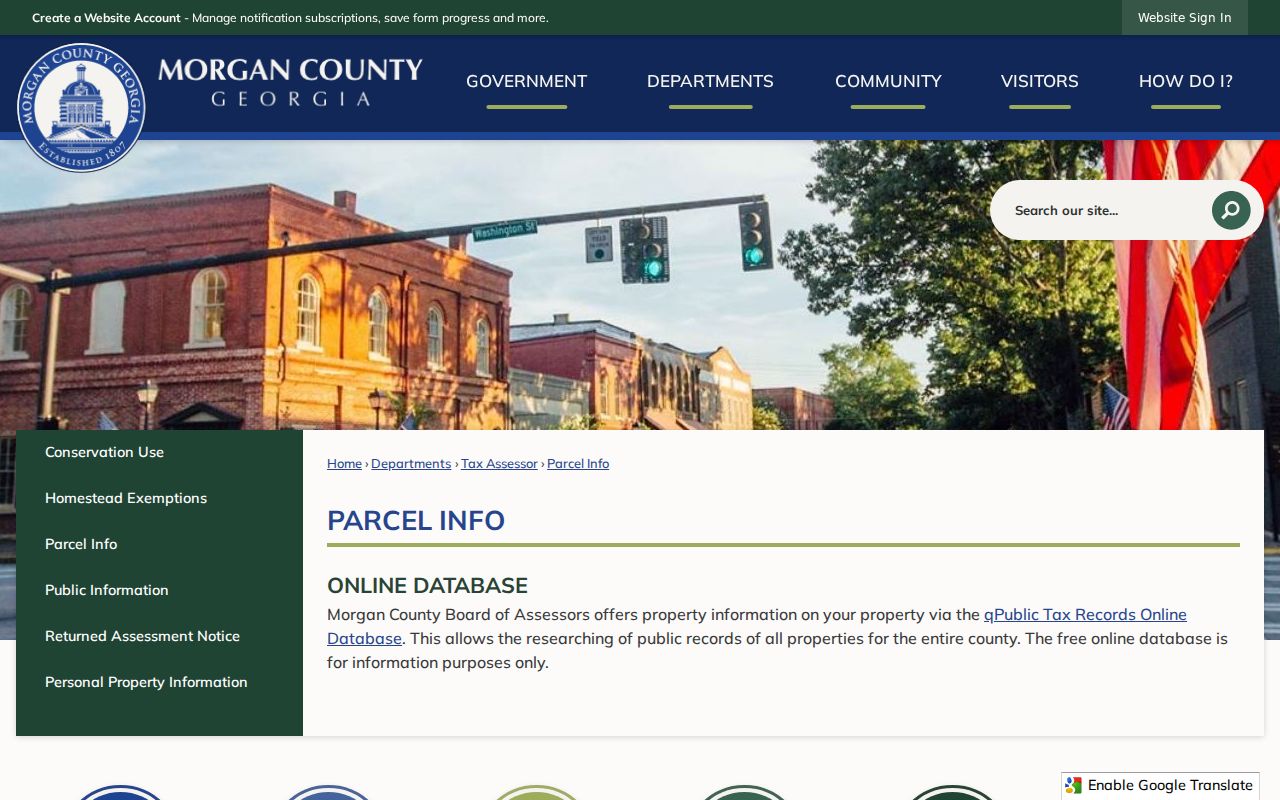
The gateway page identifies the county source even when qPublic presents a browser challenge. It displays no owner names itself. The parcel card and the matching newest deed supply that evidence.
If online access fails, contact the Board of Assessors for the current parcel card. Then contact the Clerk for the latest deed. An open-records request can also reach a defined existing record. Name the parcel, address, record type, and date range so the custodian can find it.
Confirm Morgan County's Current Owner Against the Deed
Two indexes give Morgan County deeds the recorded check. The GSCCCA Real Estate Index and the Morgan Local Land Search cover the deed records. Match the deed to the same parcel by legal description, book and page, subdivision, acreage, or land-lot context. A name alone is never enough.
- Record the qPublic owner field, parcel ID, legal description, and search date.
- Search that party as grantee in Morgan County and identify the newest matching conveyance.
- Compare grantor, grantee, deed type, recording date, and land description.
- For an entity or estate, verify its role without substituting an agent, heir, or representative for the titled party.
- Owner of record
- The party the present official record associates with the parcel.
- Assessment roll
- The assessor's working record for value and taxation.
- Recording lag
- The period between a transaction and its appearance in another administrative system.
- Registered agent
- An entity contact who is not automatically the property's owner.
Resolve a New Morgan County Deed Mismatch
Sometimes the deed names a newer grantee than qPublic does. First confirm the deed affects the same legal description. Then check that it is a true conveyance. It may instead be a lien, release, correction, or an unrelated same-name filing. Keep execution and recording dates separate. A correction deed can clarify an earlier filing without representing a new sale.
When the tax roll looks stale or factually wrong, contact the Board of Assessors. The Assessor sets values and maintains parcel data. The Tax Commissioner collects the tax bill but does not hold the deed records.
Interpret Morgan Trusts, Estates, and LLCs
An entity name can be the current owner exactly as shown. Run it through the Georgia Business Search for registration context. But a registered agent is not the title holder. Keep a trustee's capacity attached to the trust name. Use Probate Court authority to explain an executor or administrator deed.
A beneficiary or heir does not become the record owner just because probate papers name that person. Where a chain of title passes through an estate, read the newest valid conveyance, the court order, and the estate authority together. Draw a conclusion only after that.
Use Morgan's Assessment Notice for Timing, Not Title
The Board of Assessors places the current-year assessment notice below the parcel values at the bottom of the qPublic record. It dates the valuation snapshot. It also shows the basis for any assessment appeal. It is not a conveyance and settles no title question.
Save the notice year beside the owner field. That detail explains why a tax record reflects an earlier administrative cycle even after a newer deed has been recorded.
Check the Owner When qPublic Is Unavailable
If the portal challenge blocks the current card, search the Clerk's real-estate systems by the best known name. The legal description helps too. Then contact the Assessor for the parcel record. The Clerk's Records Room at 384 Hancock Street in Madison allows free research. Printed copies cost money. Staff do not perform legal research for visitors.
An open-records request is another route to existing county records that are not otherwise accessible. Describe the parcel, address, record sought, and date range narrowly. That detail helps the custodian identify it.
Separate Morgan's Situs and Mailing Evidence
The situs is the land or improvement being assessed. The mailing field directs tax and owner correspondence. The two can match, but no rule requires it. A business office, trustee, estate representative, agent, lender, remote owner, or tax-mail recipient can all explain a difference between the addresses.
Record both fields exactly and label the source of each. Never "correct" one with the other, and never treat a mailing city or ZIP as proof of a municipal boundary. USPS delivery geography can cross city and county lines. When jurisdiction matters for a permit or zoning question, verify it against the county or city boundary source.
Document a Morgan Current-Owner Conclusion
A solid owner-of-record file starts with a record card that captures the essentials. Note the query, the date and time, and the portal URL. Record the parcel number, the owner label, the situs, the mailing address, and the legal description. Add the sale clue and the assessment year. Include a link to the plat or GIS map. The deed confirmation should list the instrument type, grantor, and grantee. It should also show the execution date when shown, the recording date, and the book/page. Keep screenshots or citations with the notes.
Sometimes the owner of record still stays unclear. Say so plainly, and name the exact sticking point. It could be an unposted tax roll update or a same-name match. It could also be a description change, a correction deed, an estate transfer, or an entity role. Reporting uncertainty is more accurate than picking a name without support.
Distinguish Morgan Ownership From Value
The qPublic card often puts owner and value fields side by side, yet they prove different things. Georgia property is generally assessed at 40 percent of fair market value for tax purposes. Exemptions then adjust the taxable figures. None of those numbers establishes title or confirms who occupies the parcel.
Keep the two uses straight. The current-year assessment notice dates the valuation administration. The newest matching deed confirms the current property owner. Cite the same parcel card carefully, keeping each purpose separate.
Monitor the Morgan Owner Record With FANS
The Clerk's Filing Activity Notification System sends alerts tied to a registered name or property address. An alert can point an owner toward a new filing. FANS expressly does not guarantee completeness, accuracy, or fraud prevention. After an alert arrives, review the actual recorded instrument. The service is a monitoring layer. It is not a replacement for the owner card or deed confirmation in Morgan County property records.
Use Morgan County Owner Information Lawfully
A mailing address on the Morgan County tax roll is an official correspondence clue. It is nothing more. It may belong to a trust, business, estate, lender, agent, or remote owner. It does not show occupancy. Georgia confidentiality protections also cover some residence information. No one should try to defeat them when reading property records.
Current does not mean conclusive. Confirm Morgan's owner of record with the newest matching deed. Never use owner or address information to stalk, harass, threaten, or harm anyone.
A property search only goes so far. For a purchase, a contested interest, an estate, or a boundary dispute, pull the recorded deed and other instruments from the Morgan County deed records, then get professional review. The broader address-to-owner method is covered in who owns a Morgan County property.